




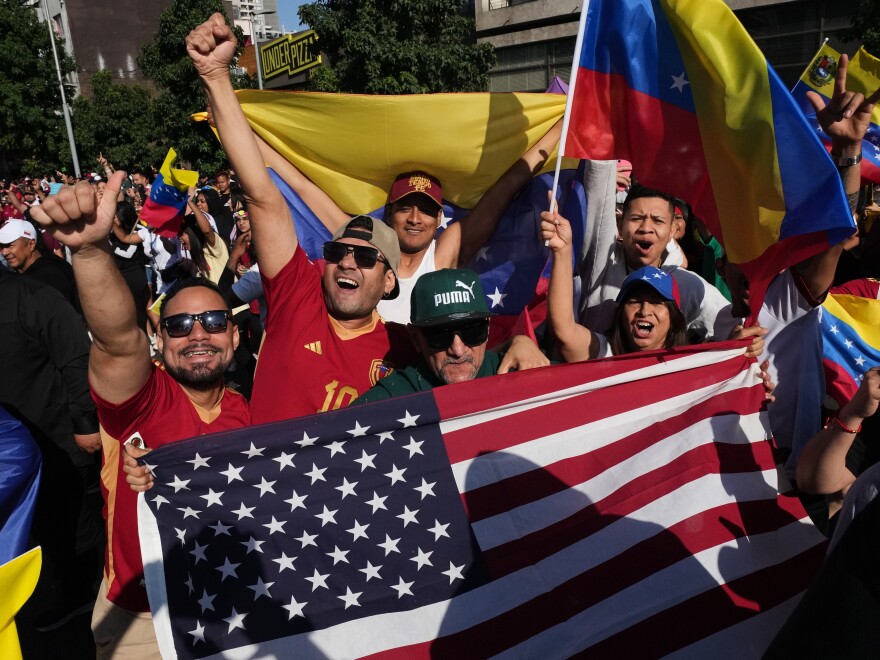
In January 2026, the United States carried out targeted military strikes in and around Caracas, Venezuela’s capital. The action immediately drew global attention, criticism from several countries, and urgent discussions at the United Nations. While the conflict is unfolding thousands of kilometres away, its implications extend well beyond Latin America.
Why the US Took Military Action
According to reports by Reuters and The Guardian, the US justified the strikes on multiple grounds. Washington has long accused the Venezuelan government under President Nicolás Maduro of large-scale drug trafficking, links with criminal networks, and serious human rights violations. US officials stated that the strikes were aimed at weakening these networks and pressuring the Venezuelan leadership, not at targeting civilians.
Another key reason lies in geopolitics. Venezuela has deepened ties with countries like Russia and China over the past decade, both economically and militarily. US policymakers see this as a direct challenge to American influence in the Western Hemisphere. By acting decisively, Washington is signalling that it will not tolerate hostile governments or rival powers expanding their footprint in its strategic neighbourhood.
US officials also framed the action as part of a broader effort to restore democracy in Venezuela, citing disputed elections, suppression of political opposition, and economic mismanagement that has driven millions of Venezuelans to flee the country, as reported by Reuters and The New York Times.
Global Reaction and Legal Questions
The strikes triggered sharp reactions at the United Nations Security Council. Several countries questioned the legality of the action, arguing that it violated Venezuela’s sovereignty and the UN Charter. The Guardian reported that even some US allies expressed discomfort, warning that unilateral military action without clear UN approval could set a dangerous precedent.
The US, however, defended its move as necessary for regional security and law enforcement, maintaining that Venezuela had become a hub for transnational crime affecting multiple countries.
How This Affects India
At first glance, Venezuela may appear irrelevant to India’s immediate interests, but the impact can be felt in several important ways.
1. Oil prices and inflation
Venezuela holds some of the world’s largest oil reserves. Any instability there raises concerns in global energy markets. Even if Venezuelan oil exports are already limited due to sanctions, geopolitical tension often pushes crude prices higher. For India, which imports most of its oil, rising prices can mean higher fuel costs, increased inflation, and pressure on household budgets, as noted by The Indian Express and Reuters.
2. Global norms and foreign policy
India has consistently supported respect for sovereignty and international law. A major power using military force without broad international backing complicates this global framework. New Delhi will have to carefully balance its growing partnership with the US while staying aligned with its long-standing principles of non-interference.
3. Strategic balancing
India maintains relationships with the US, Russia, and other global players. Events like these highlight the increasingly confrontational nature of global politics. Indian policymakers will closely watch how international rules are interpreted and enforced, as similar logic could one day be applied in regions closer to home.
4. Market sentiment
Geopolitical shocks often increase uncertainty in global markets. While Indian stock markets may not see an immediate direct hit, sustained tensions can affect foreign investment flows, currency stability, and overall investor confidence, according to market analysts quoted in Indian business newspapers.
The Bigger Picture
The US strikes near Caracas are not just about Venezuela. They reflect a world where major powers are increasingly willing to use force to protect strategic interests. For India, the episode is a reminder that distant conflicts can influence energy security, diplomacy, and global stability in subtle but meaningful ways.
As the situation evolves, India’s response is likely to remain cautious, focused on protecting economic interests, supporting international law, and maintaining strategic autonomy in an increasingly polarised world.
Post a comment


A bird so powerful, it became a nation’s money!
Guatemala named its currency after the sacred quetzal bird, symbolising freedom, ancient Maya beliefs, and...
Not Shimla, not Goa-these destinations are winning the travel game!
Crowded tourist spots are losing charm as travellers turn to peaceful offbeat destinations offering nature,...
More Than Just Cuddles: How "Pleasing Pets" is Securing Your...
Pleasing Pets protects your furry family with HDFC ERGO pet insurance and stylish apparel with...
Beyond Outsourcing: Why India’s Deep-Tech Leap is a Strategic Pivot...
India is transitioning from an IT services hub to a deep-tech powerhouse, offering the global...
These countries have the world’s strongest education systems…!
Countries with strong education systems focus on quality teaching and innovation; India shows progress but...