




Many people hear the term Indian subcontinent and assume it is symbolic or historical. In reality, the word subcontinent has a precise meaning rooted in geography and geology. India is called a subcontinent because it meets every scientific criterion required for that classification.
What Does Subcontinent Actually Mean?
A subcontinent is a large, distinct landmass that forms part of a larger continent but has its own clear physical, geological and climatic identity.
It is not a smaller or inferior continent. It simply means a region that is almost continent like in size and characteristics, but technically attached to a larger continental plate.
A region is called a subcontinent when:
-
It has clear natural boundaries
-
It shows geological independence
-
It has a distinct climate system
-
It has a long shared civilisational history
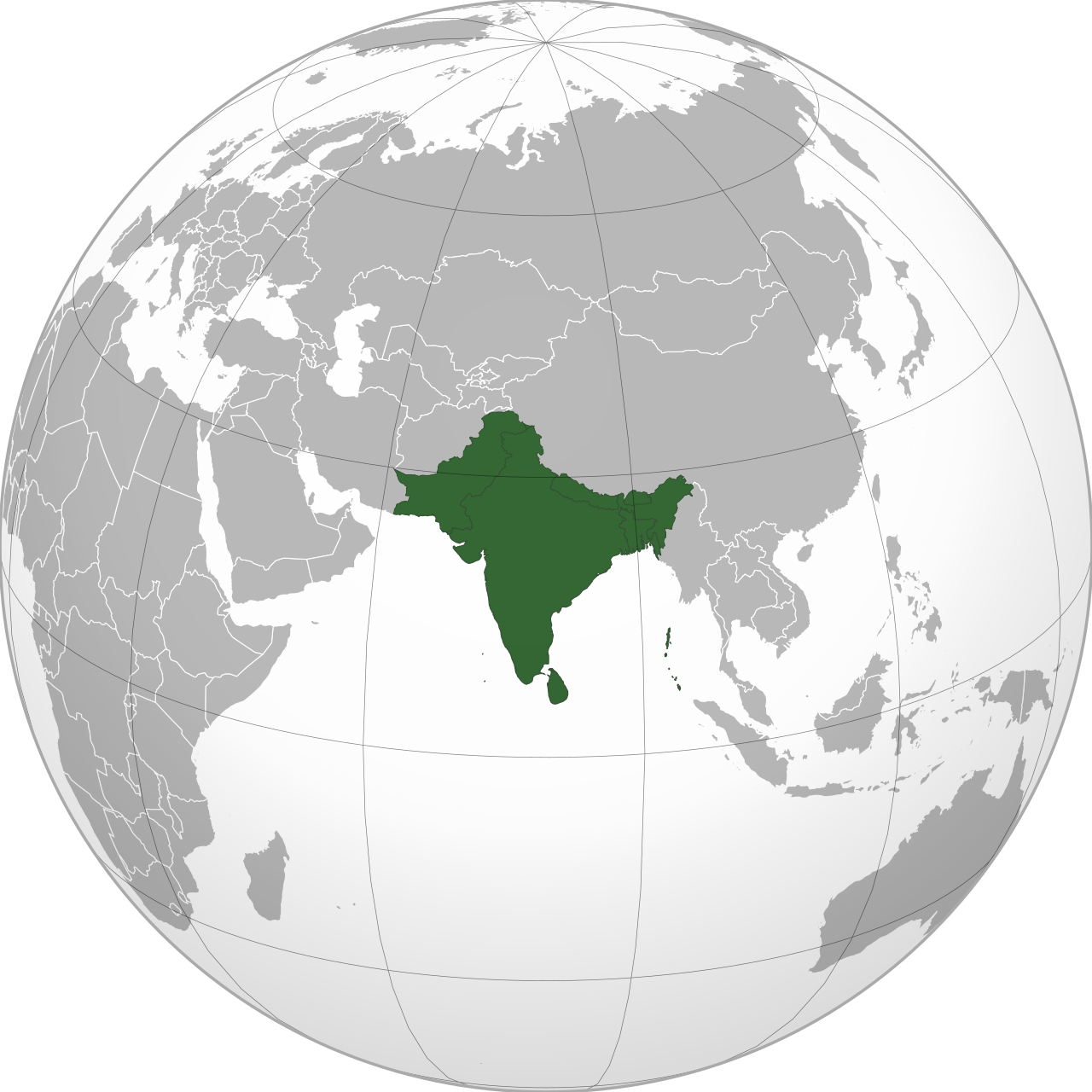
The Indian region fits all these conditions, which is why geographers and scientists classify it as a subcontinent.
A Landmass With a Unique Geological Identity
Millions of years ago, the land we now call India was not connected to Asia at all. Geological studies show that the Indian landmass was once part of an ancient southern supercontinent.
Over time, the Indian tectonic plate broke away and travelled northward on its own. For millions of years, it moved independently, behaving like a separate continent.
Around 50 million years ago, it collided with the Eurasian plate. This collision formed the Himalayas, the highest mountain range on Earth, which still continues to rise today.
Because India sits on its own tectonic plate, geologists consider it geologically distinct, even though it is now attached to Asia.
Strong Natural Boundaries Set It Apart
Unlike many regions that blend gradually into neighbouring areas, the Indian subcontinent is sharply defined by natural barriers.
To the north stand the Himalayas, one of the most powerful natural barriers on the planet. To the west lie deserts and rugged mountains. To the south and east, the land is surrounded by the Indian Ocean, Arabian Sea and Bay of Bengal.
These boundaries historically limited movement and interaction, allowing the region to develop its own systems of life, culture and governance.
A Climate System of Its Own
The Indian subcontinent has one of the most distinctive climate systems in the world, the monsoon.
Seasonal winds bring intense rainfall that shapes agriculture, rivers, food production and daily life. This monsoon system is driven by the interaction between the Himalayas and the Indian Ocean.
Because of its scale and consistency, scientists study the Indian monsoon as a separate global climate system, further reinforcing the region’s uniqueness.
A Long Shared Civilisational History
For thousands of years, the region that includes present day India, Pakistan, Bangladesh, Nepal, Bhutan and Sri Lanka evolved with strong internal connections.
Trade routes, languages, philosophies, food systems and social structures developed largely within this geographic space. While there was contact with Central Asia and the Middle East, the core civilisational evolution remained internally connected.
This shared historical development supports the idea of a distinct subcontinental identity.
Why This Matters for Common Indians
Understanding why India is called a subcontinent helps explain many realities of everyday life. It explains why India’s climate behaves differently, why its geography shapes politics and agriculture, and why the region developed such rich and varied cultures.
It also shows that India’s identity is shaped not just by modern borders, but by millions of years of natural history and thousands of years of human civilisation.
Conclusion
India is called a subcontinent because it behaves like one. It travelled independently, formed its own geological base, developed strong natural boundaries, created a unique climate system, and nurtured a civilisation within those boundaries.
Being part of Asia does not contradict this identity. The term Indian subcontinent simply recognises how distinct and self contained this region truly is.
Post a comment

India’s Energy Crisis: Is Your piped Gas Running Out?
A major conflict in the Middle East has choked India’s gas supply lines, forcing a...
PM Modi Inaugurates Key Corridors Completing India’s First Ring Metro...
Prime Minister Narendra Modi has inaugurated the final segments of the Delhi Metro’s Ring Corridor,...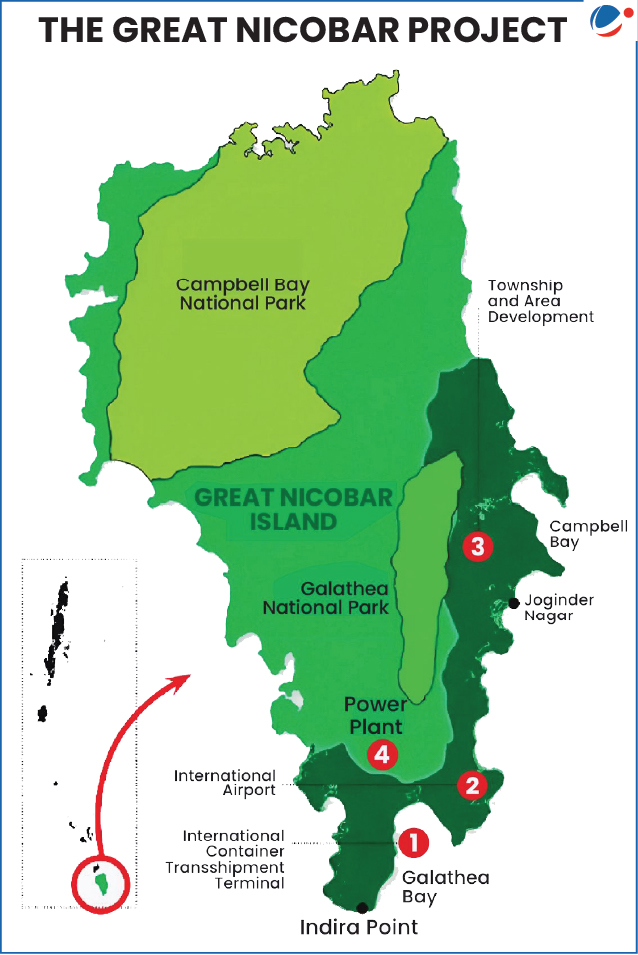
Great Nicobar Project- Development Vs Environment !!!
The National Green Tribunal has cleared one of India’s most controversial infrastructure plans, the Great...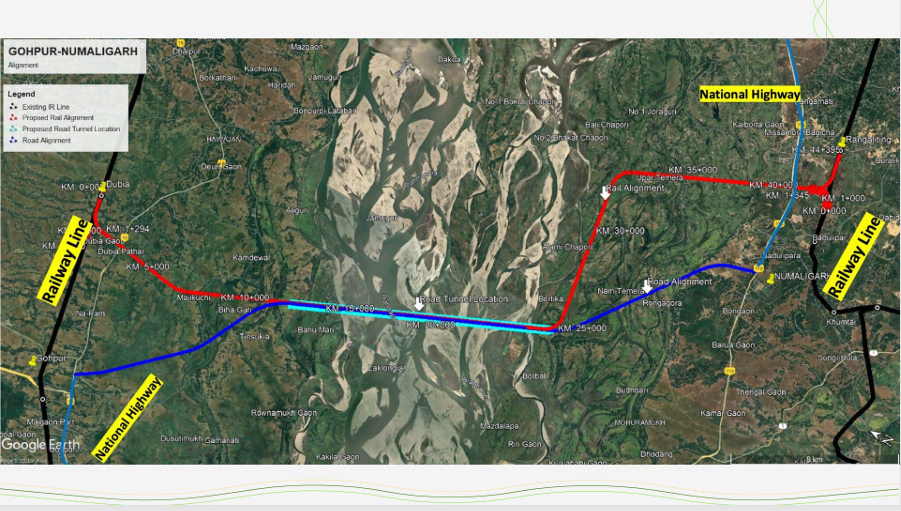
India's First Underwater Road & Rail Tunnel
India is building its first ever underwater twin tube road cum rail tunnel in Assam,...