





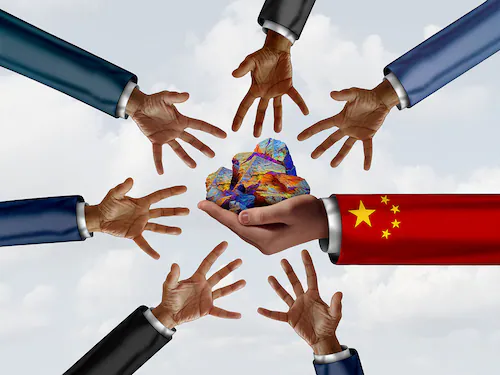
If one country controls over 90% of a crucial resource, any move it makes can shake the world. That’s exactly what happened in 2010 when China tightened exports of rare earth elements, the metals powering electric cars, wind turbines, medical devices, and even AI technologies.
Everyone expected chaos. Prices shot up by 4,500%, industries panicked, and global tensions rose.
But something unexpected happened next.
Instead of collapsing, companies across the world began innovating at record speed.
A new Harvard Business School study found that:
-
Industries outside China that depended heavily on rare earths increased patenting by 7.4%
-
Companies began finding substitutes for rare earths
-
Others created new processes to use less or eliminate them entirely
For example, Toyota developed new electric motor magnets that reduce or remove elements like neodymium and dysprosium, directly because of supply issues.
What began as a crisis turned into a global push for smarter, more efficient technology.
The same study uncovered a surprising split:
-
Non-Chinese companies that relied heavily on rare earths saw productivity rise
-
Chinese industries using rare earths actually became less productive
It’s the classic story of pressure creating progress, except the progress happened outside China.
Global trade numbers back this up.
Rare earth–intensive industries outside China grew their exports 0.3 percentage points more per year than less-exposed industries.
In short:
The countries that felt the squeeze the most became the ones who adapted the fastest.
China’s attempt to control the rare earth market set off a chain reaction the world didn’t expect.
A move meant to protect its own industries ended up:
-
Supercharging innovation abroad
-
Boosting global competitors
-
Shifting productivity and trade advantages to other nations
It’s a powerful reminder of how markets respond to pressure, not by stopping, but by evolving.
And sometimes, a supply shock isn’t the end of growth…
It’s the beginning of a global innovation race. China tried tightening its rare earth supply, but the world responded in unexpected ways. This story uncovers how a crisis turned into a surprising boom in innovation and global competition.


Post a comment


Desert to Drinking Water: How UAE Keeps Millions Hydrated!
Despite having no rivers or lakes, the United Arab Emirates meets water needs through large-scale...
India’s Most Impactful Startups Redefining Innovation!
From air-to-water systems and solar trees to recycled paper and tech buses, 2025 startups are...
Horoscope Today: January 16, 2026 Cosmic Forecast!
Stars today favour grounded clarity, honest communication and intentional action — focus on your priorities...
Tarot Forecast: November 30’s Promise for All Signs!
Today’s tarot reading offers guidance on finance, relationships, and clarity — urging balance, thoughtful action,...