




Live Manned–Unmanned Teaming at Edwards AFB
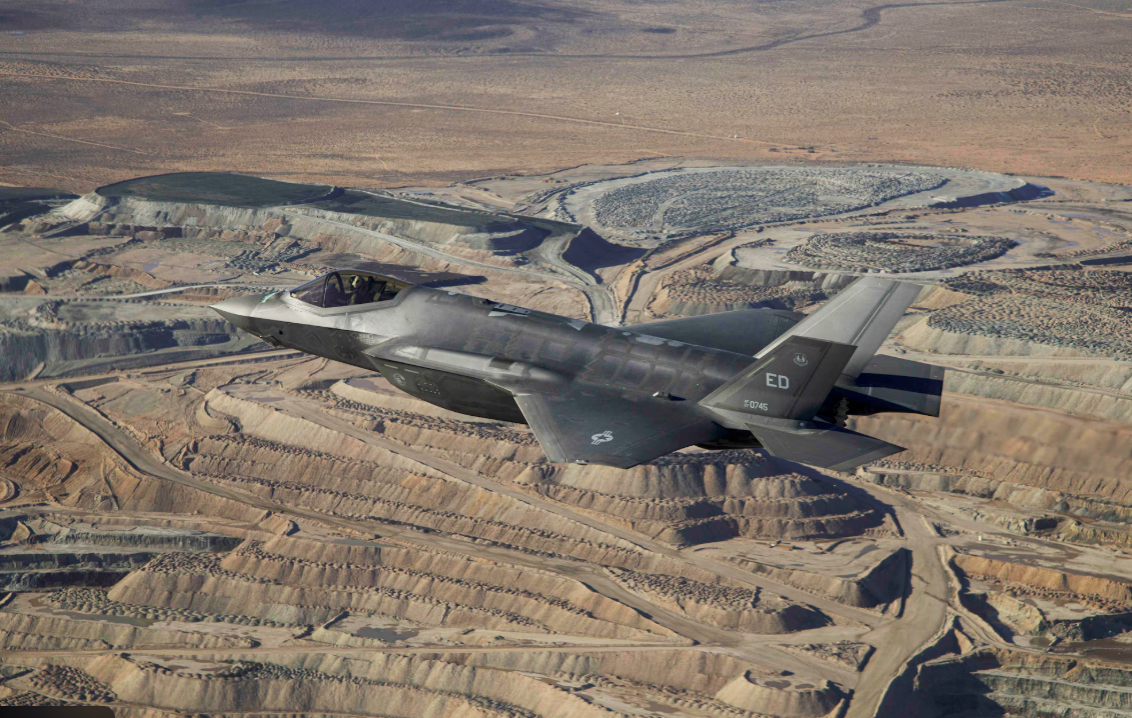
In a significant advancement for autonomous air combat operations, the U.S. Air Force conducted a live flight demonstration at Edwards Air Force Base pairing a human-piloted F-22 Raptor with MQ-20 Avenger developed by General Atomics.
The exercise showcased real-time command and control between a fifth-generation fighter and an autonomous unmanned jet. Acting as the command aircraft, the F-22 pilot issued live autonomy commands through secure tactical data links. The MQ-20 executed waypoint adjustments, combat air patrol (CAP) patterns, and simulated airborne threat engagements while maintaining continuous tactical message exchange.
This marked a practical demonstration of the Air Force’s Collaborative Combat Aircraft (CCA) concept—where autonomous drones operate as force multipliers under human supervision.
Autonomy Software and Tactical Integration
The MQ-20 was equipped with General Atomics’ Autonodyne Bashi Pilot Vehicle Interface, enabling direct transmission of autonomy instructions from the F-22 cockpit.
The aircraft independently processed onboard sensor data while responding to pilot-directed commands. This validated:
-
Secure, real-time data exchange
-
Autonomous onboard decision-making
-
Coordinated tactical maneuver execution
-
Continuous command-loop communication
The architecture ensured the human pilot retained command authority while delegating tactical execution tasks to the autonomous system.
Expanding the Autonomy Roadmap
The Edwards test builds on the Air Force’s broader autonomy framework. Earlier in February, the service validated its Autonomy Government Reference Architecture (A-GRA) across multiple vendors.
One milestone included integration of Collins Aerospace’s Sidekick software on General Atomics’ YFQ-42A—recently nicknamed “Dark Merlin.” The aircraft completed a multi-hour semi-autonomous mission under ground operator control, further reinforcing the feasibility of scalable manned-unmanned teaming.
General Atomics has used the MQ-20 as a surrogate CCA platform for over five years while advancing purpose-built systems such as the XQ-67A and YFQ-42A.
Strategic Implications
The Air Force views Collaborative Combat Aircraft as critical force multipliers for fifth-generation fighters. By pairing crewed platforms like the F-22 with autonomous drones, the service aims to:
-
Extend sensor and ISR reach
-
Increase lethality
-
Improve survivability in contested environments
-
Reduce pilot workload
-
Assign high-risk missions to unmanned assets
Under this operational model, humans remain in control of strategic and complex decision-making, while autonomous systems handle execution-intensive or high-risk tactical tasks.
The successful F-22 and MQ-20 demonstration represents another step toward operational deployment of autonomous air combat teaming—transitioning autonomy from experimental testing into integrated frontline capability.